Friday, August 17, 2007

Why do you need Citibank student loans?

In a technologically-advanced age we are living, there are more than just five basics in life. In order to make it alive in this world, we need more than just air, water, clothes, shelter and food to survive.

Admit it. Most of us need our mobile phones, our computers, and a good Internet connection to survive a day of work. We need decent life and health insurance coverage, and a reliable financial company to take care of our monetary woes -- and that’s where Citibank student loans come in.

Reliable financial institutions like Citibank assist individuals to finance their education. The expenses involved in pursuing a degree in universities are increasing each year thus, the increase in student loan applications.

Why do you need a Citibank student loan? It’s simply because a student loan is a necessity nowadays. With prices rising every now and then, it’s logically difficult to manage school fees among other financial worries we have to face each day.

So why choose a Citibank student loan?

 With a Citibank student loan you can finance your education with no trouble. Citibank offers a credit-based private loan for students in a program called CitiAssist loan.

 CitiAssist has an open three-level scoring procedures based on credits that are considered as excellent, good, and fair. There are no further loan origination or guarantee charges. What’s so great about this? You can maximize the whole loan amount to finance and manage your education fees.

 If you sign-up to have your payment taken electronically from your bank account through E-Z Pay during repayment, you will get 0.25% interest rate cutback. Immediately avail of a 0.50% interest rate cutback on your outstanding term if you paid your first forty-eight monthly dues on time. Now that’s a great deal there for you!

 No payments will be made during the two-quarter grace period proceeding graduation, or while you are still in school.

 You have the options to pay your loan interest within 24 or 48 months.

 Citibank offers you the option to repay your student loan up to twenty years with no prepayment penalties!

A student loan application is easy and is not even time-consuming. Generally, student loan application procedures are quick and simple. There are no deadlines or application fees when you avail of student loans.

Education is not a privilege. Education is a right. Get a Citibank student loan now and stop worrying about your tuition fees. Let Citibank take care of your financial troubles today while you study and prepare for your success in the future.

We found Cheap Hotels in Berlin and Cheap Hotels In Vienna

Come November, three of my friends and I will be on our way to Europe for a month long vacation.

Now that is something I'm really looking forward to!

The whole vacation trip would include flying to Berlin and Vienna. Yesteray I came across a website offering cheap hotels in Berlin, and cheap hotels in Vienna too.

My friends and I have been planning on what to do and where to go while we're sight-seeing in Berlin and Vienna. Well, I can't wait to visit galleries, museums, parks and malls too. Of course, we also wanted to witness first-hand the excitement and the energy of the club and party scenes in both Berlin and Vienna.

I can't wait to party the European way! ;)

Thursday, August 16, 2007

Lamps One, Lamps All

My friend’s birthday is coming up and I wanted to give her something she could use at home or in the office. It’s better to give someone a gift that they can really use than just grab anything fancy and have the items locked in the cabinet or displayed on the shelf.

So after a few hours of surfing the Internet, I finally had found the perfect gift for her. Actually, perfect gifts because I decided to get her two lamps as birthday presents. She had been complaining recently that her office desk lamps and old lamp shades at home are all busted. She complained of never getting that comfortable reading time she used to have until her lamps malfunctioned.

I found this great site, Farreys.com – and they have all the lamps my friend would really want to have. Name it, Farreys have it. From lamps shades, table lamps, to floor lamps, desk lamps and even torchieres! They have them at the most affordable prices.

I checked out their website, www.Farreys.com, and they have this website feature where customers can search according to the lamp applications, brands, and even lamp style. It is so convenient to find the perfect lamps at Farreys.

I think it’s about time you check out your lamps too!

Thursday, August 2, 2007

1Million Toys Recalled

Toy-maker Fisher-Price is recalling 83 types of toys — including the popular Big Bird, Elmo, Dora and Diego characters — because their paint contains excessive amounts of lead.

The worldwide recall being announced Thursday involves 967,000 plastic preschool toys made by a Chinese vendor and sold in the United States between May and August. It is the latest in a wave of recalls that has heightened global concern about the safety of Chinese-made products.

The recall is the first for Fisher-Price Inc. and parent company Mattel Inc. involving lead paint. It is the largest for Mattel since 1998 when Fisher-Price had to yank about 10 million Power Wheels from toy stores.

In an interview with The Associated Press on Wednesday, David Allmark, general manager of Fisher-Price, said the problem was detected by an internal probe and reported to the Consumer Product Safety Commission. The recall is particularly alarming since Mattel, known for its strict quality controls, is considered a role model in the toy industry for how it operates in China.

Fisher-Price and the commission issued statements saying parents should keep suspect toys away from children and contact the company.

The commission works with companies to issue recalls when it finds consumer goods that can be harmful. Under current regulations, children's products found to have more than .06 percent lead accessible to users are subject to a recall.

Allmark says the recall was "fast-tracked," which allowed the company to quarantine two-thirds of the toys before they even made it to store shelves. In negotiating details of the recall, Fisher-Price and the government sought to withhold details from the public until Thursday to give stores time to get suspect toys off shelves and Fisher-Price time to get its recall hot line up and running. However, some news organizations prematurely posted an embargoed version of the story online.

Allmark said the recall was troubling because Fisher-Price has had a long-standing relationship with the Chinese vendor, which had applied decorative paint to the toys. Allmark said the company would use this recall as an opportunity to put even better systems in place to monitor vendors whose conduct does not meet Mattel's standards.

He added: "We are still concluding the investigation, how it happened. ... But there will be a dramatic investigation on how this happened. We will learn from this."

The recall follows another high-profile move from toy maker RC2 Corp., which in June voluntarily recalled 1.5 million wooden railroad toys and set parts from its Thomas & Friends Wooden Railway product line. The company said that the surface paint on certain toys and parts made in China between January 2005 and April 2006 contain lead, affecting 26 components and 23 retailers.

"Anytime a company brings a banned hazardous product into the U.S. marketplace, especially one intended for children, it is unacceptable," said Nancy Nord, acting chair of the Consumer Product Safety Commission. "Ensuring that Chinese-made toys are safe for U.S. consumers is one of my highest priorities and is the subject of vital talks currently in place between CPSC and the Chinese government."

Carter Keithley, president of the Toy Industries Association, praised Mattel's quick response to the problem, and suggested Mattel will use this setback as a lesson for not only the company but for the entire industry. However, he expressed concern about how the recall and other toy recalls will play out in consumers' minds in advance of the holiday season.

"We are worried about the public feeling," said Keithley, adding he observed how toy companies are embracing strict controls during a recent toy safety seminar in China. "We have thought all along that (consumers) can be confident in the products," he said. "But if companies like Mattel have this, then you have to ask how did this happen?"

Tuesday, July 31, 2007

Incubus The Band


Incubus Members:

Brandon Boyd
Mike Einziger
Jose Pasillas
Chris Kilmore
Ben Kenney

Incubus is a five-piece alternative rock band based out of Calabasas, California. The band has enjoyed great success over their sixteen-year career, with singles like "Drive", "Are You In?", "Wish You Were Here", "Megalomaniac", "Talk Shows on Mute", "Anna Molly", "Pardon Me", "Warning" and "Dig" making them household names in today's musical climate. Incubus enjoyed multi-platinum album success with albums such as 1999's Make Yourself , 2001's Morning View and 2004's A Crow Left of the Murder. Incubus released their latest studio effort Light Grenades on November 28, 2006. On release, the album went straight to the top of the charts in the United States due to the success of first single "Anna-Molly". Their new hits include "Dig","Love Hurts", and "Oil & Water".

Beginnings and Fungus Amongus

Vocalist Brandon Boyd, drummer Jose Pasillas, and guitarist Mike Einziger met at various points in Calabasas High School. At the age of fifteen, they formed the band with bassist Alex Katunich. After being booed offstage at their first show under the name The Kansas City Shuffle, Mike found the word "incubus" in a thesaurus, and adopted it as the band's new name (the word is actually the name for a mythological demon that is believed to have sexual intercourse with sleeping women). Incubus immediately began writing music and started to play more and more frequently, graduating from parties to small clubs. While in the 11th grade, Mike found a $100 bill on the ground, and with that money, the band did their first "Pay to Play" gig in Hollywood at the Roxy. They also performed at dozens of shows at other sunset strip clubs such as the Whisky and The Troubadour. Many of these performances were sold out. Before producing "Fungus Amongus" the group recorded a three song demo tape titled "Closet Cultivation," which including the songs "Pillow my eyes," "Bathe in my Snot," and an early version of the song "Speak Free." Due to a personal problem it is speculated Brandon didn't wash his face for six weeks. In 1993, Incubus met Jim Wirt, a local record producer and musician. Wirt offered two record demos for the band during unbooked studio times and the band recorded their first album, (a compilation of the demos they had recorded between 1992-1994) the funk-based Fungus Amongus. However, due to lack of label interest, Incubus released their first full length album on their own label, with Einziger paying for the first pressing of 1,000 disks out of his own pocket.

Throughout 1994 Incubus were regular performers at the now closed San Fernando Valley music club "Mancini's", often playing all-ages free Sunday night shows known as "Club Engine Sludge". They also were on the bill for a sold-out show that featured the bands Skinflint and headliner Unwritten Law.

In 1995, Gavin Koppell saw the band play and asked if they would be interested in using some of his tracks, which incorporated the use of turntables. Gavin joined full-time after his first rehearsal. Shortly thereafter, Incubus' unusual amalgamation of styles and high-energy shows, combined with its growing fan base, attracted labels and put the band in the enviable position of a bidding war. Incubus finally landed a record deal with Immortal/Epic Records. Touring throughout 1996, Incubus established themselves as a top draw live act, gaining a dedicated following all over the United States. To start off the new year, Immortal Records released Incubus' EP entitled Enjoy Incubus on January 7, 1997. The EP featured re-recordings of four tracks from Fungus Amongus, plus two recently written tracks. These were the first recordings to include the newly acquired Gavin Koppell a.k.a. 'DJ Lyfe'. After the release of Enjoy Incubus, the band completed several mini-tours in its support. Their first major tour was with Korn in Europe.

S.C.I.E.N.C.E.

S.C.I.E.N.C.E., Incubus' second studio album, was released on September 9, 1997. "We like it when our stuff sounds as weird as possible," said Mike. "When we signed our record deal and started working on this album, we were worried that someone would come along and tell us to hold back, and try and make our songs a little more palatable. But that never happened. They kinda just said, 'Do whatever you want'. With that kind of support, we just let everything kind of run wild." Said Brandon Boyd, "S.C.I.E.N.C.E. was done in six weeks, straight through, at 4th Street Recording. Very different experience, but very important on this band’s existence."

True to form, Incubus was asked to play a handful of dates with 311 in support of the album. They had only expected to tour with them for 2 weeks, but things went well and 311 asked them to stay on for the remainder of the tour, totaling six weeks of arena-level shows.

In February of 1998, the band asked Gavin Koppell to leave the band due to personal and creative differences. Their attorney, Todd Cooper, recommended they check out Chris Kilmore of Harrisburg, Pennsylvania to fill Gavin's position. Mike Einziger said that "After letting go of Gavin, I wasn't even sure if I wanted to acquire another member into the band, but then we met Chris and my opinion instantly changed." The band loved his style and attitudes on life, and asked him to join the band permanently. After a very productive first tour with the band Far, Incubus began tours with many other bands such as System of a Down and Black Sabbath, and participated in festivals such as Ozzfest and the Warped Tour.

Make Yourself

After constant touring throughout 1998, and after selling over 100,000 copies of S.C.I.E.N.C.E. without the support of radio or MTV, Incubus then took some time off to record their new album Make Yourself.

After just 2 weeks in the studio with producer Jim Wirt, the band was unhappy with the recordings and opted to continue recording without a producer. After another 3 weeks of recording, REM/Nirvana producer Scott Litt took an interest in their songs and started taking part in the recording sessions, mainly focusing on songs like Drive and Stellar. According to the band, Scott's involvement in the record came mostly during the mixing process.

Make Yourself was released on October 26, 1999. Right after their album's release, the band went on tour with Primus and Buckethead, a tour which lasted for the remainder of the year. The first song that kicked off the album, "Privilege," was featured on MTV Sports: Pure Ride for the PSX. The band also released the single, "Pardon Me," but it was initially not well-received by radio stations. Brandon and Mike decided to perform a live acoustic version of the song at the few radio stations who were showing interest, and this in turn spread the word of the song. Many radio stations began to play the acoustic version, including the highly influential Los Angeles radio giant KROQ.

With sparked interest in the song, radio stations began playing the studio version of "Pardon Me." In response, Incubus made a video for the song and released a six song EP titled When Incubus Attacks (Vol. 1) on August 22, 2000. The EP contained the acoustic version of "Pardon Me." In its first week, the EP sold nearly 40,000 copies, and scored #41 on the Billboard Album Charts. To start off 2000, the band headed out on Tour with System of a Down, and Mr. Bungle until March, at which point they embarked on a headline tour in clubs until April.

Due to the success of "Pardon Me," Make Yourself hit Gold Status (500,000 copies sold) in April of 2000. Incubus continued to tour overseas, and returned home at the end of May to go on a tour of the United States with long time friends 311. "Stellar," the next single from the album was soon released, and its video received afternoon airplay on MTV and TRL, becoming a huge success on Modern Rock Chart. In July, Incubus were once again on the Ozzfest bill, until the late summer.

The band then took a short break after finishing the Ozzfest 2000 Tour, playing two acoustic shows at Artist Direct Studios. On October 5, 2000, Make Yourself went Platinum (1,000,000 copies sold), and shortly after, the band went on tour with Deftones. The band re-released Fungus Amongus on November 7, 2000.

On January 15, 2001, the band released "Drive," the third single from Make Yourself. It moved quickly up to the top of the Modern Rock Charts, eventually hitting the #1 spot. The single also found a more mainstream audience and received enough rotation to hit the top ten of the Billboard Hot 100 singles chart.
Morning View

The band took a break during the first part of 2001 before heading to a beautiful beachside mansion in Malibu, California, to record their follow-up album, which would later become known as Morning View.

They hit the road with Hundred Reasons in Europe from June until the first week of July. At this time, the band was invited to play with the Area Festival, which featured Moby, Outkast, The Roots, Paul Oakenfold, Carl Cox, and Nelly Furtado. Also, in July, Make Yourself was certified double Platinum, selling 2 million copies. In August, the band got to play their first shows in Australia and Japan, before returning to the United States to begin their long-awaited headlining tour with their long-time friends from California, Hoobastank. Meanwhile, the band's video for "Drive" was nominated for an MTV Video Music Award in the category of Best Group Video.

Continuing to tour, Incubus released their first single, "Wish You Were Here", from their upcoming record, Morning View, on August 21, 2001. The single instantly began to climb up the Modern Rock charts, reaching #2 by early September. The music video was released at the end of that month, after being re-cut to make it more viewable in the wake of the 9/11 disaster. The video earned viewings on MTV's TRL, VH1, and MuchMusic.

On October 23, 2001, the band released their third full-length major label album. The name was taken from the street on which the band's recording studio was situated. Incubus continued to headline dates after its release, and "Wish You Were Here" continued to sit among the top 10 on Billboards Modern Rock Charts. Morning View debuted on the Billboard Top 200 at the #2 spot (266,000 copies were sold in its first week). This was the highest ever placement for Incubus. At the same time, "Wish You Were Here" was at #2 on the Modern Rock Charts, and "Drive" sat at #48 on the Hot 100 chart. The band won an award for Billboard's Modern Rock Single of the Year for "Drive". By December, Morning View was certified platinum, "Wish You Were Here" was #4 on modern rock charts, and Morning View was #38 on top 200.

On December 11, Incubus released When Incubus Attacks (Vol. 2), a DVD that featured music videos for "Take Me to Your Leader", "A Certain Shade of Green", "Pardon Me", "Stellar", "Drive", "I Miss You", and "Summer Romance (Anti-Gravity)", live footage, backstage video, and more.

To begin 2002, Incubus was #9 with "Drive", #12 with "Stellar", #20 with "Wish You Were Here", #75 with "Nice To Know You" and #31 with the album Morning View. On January 24, 2002, MTV's TRL premiered the "Nice to Know You" video, and Boyd called in from Europe where the band was on tour with 311 and Hoobastank. The band was then featured on MTV's Becoming, TRL, The Tonight Show, and played the Letterman show on February 14, 2002, all before heading off to play dates in Japan and Australia for the remainder of February and March. While in Sydney, the band shot the video for their next single, "Warning", from March 7 until March 11. The band then released the DVD Morning View Sessions on May 28, shortly before playing the Weenie Roast on June 8 for KROQ. To start off the fall months, Incubus released a single for "Circles" in early September (though this was a radio only single), and there were no plans for a video. Shortly after in September and October, the band went out for a long United States tour that began on August 31 in Reno, Nevada.

Incubus issued a limited edition version of Morning View on October 1 to coincide with their fall headlining tour. The new version of the album contained a DVD dubbed the "Morning After View Session". It featured the U.K. video for the group's track "Are You In?", tour footage, new artwork, behind the scenes material, and more. Incubus' last performance in 2002 (on November 1) brought several eras for the band to a close. Their last show of the tour would be their last show touring behind 2001's Morning View, as the band looked on to playing new music. The show would also prove to be their last with bass player Alex Katunich, who left the band due to personal differences.

Katunich was quietly replaced by former The Roots guitarist Ben Kenney, who began working with Einziger on new songs for a psychedelic funk project called Time-Lapse Consortium. Incubus ended the year on the charts, having "Wish You Were Here" (#10), "Warning" (#16), and "Nice To Know You" (#26) on the Alternative Rock Format Chart, joining "Wish You Were Here" (#25) and "Nice To Know You" (#36). Morning View was the 40th best selling album of 2002.
A Crow Left of the Murder...

On January 6, 2003, the band began writing for their next record.

They were also featured on MuchMusic's "Celebrity Taste Maker" on January 24. Einziger, Kenney and Pasillas appeared at the Roxy Theatre on January 24 with Suzi Katayama and Time Lapse Consortium. The act, which featured an 11 piece orchestra, also included Neal Evans of Soulive. Suzi Katayama had worked with Incubus in the past on orchestral arrangements, specifically, in "Aqueous Transmission" and 2000s Almost Acoustic X-Mas performance. The show was the first performance of the group, which described its music as "an instrumental voyage into the world of psychedelic funk." On February 7, the band began renegotiations on their record contract.

The band, which had been signed to Epic/Immortal for seven years, cited the fact that state law limits the amount of time that an artist can be bound to a company. The band had been signed to the label for 7 years, and used California's "Seven Years Law" as a negotiating tool with Epic/Immortal. After releasing 3 highly successful albums, the band had been compensated poorly compared to the revenue that they had generated for Sony. The band entered a lawsuit against their label in order to break from their contract, to which Sony responded with a lawsuit of their own.

On March 1, Einziger, along with Scott Litt, Dave Holdredge, and Rick Will, was nominated for a Grammy in the "Best Engineered Album (Non Classical)" category, for their work on Morning View. On April 3, after weeks of circulating rumors about Alex Katunich's departure from the band, an official announcement was made by the band. A decision had been reached amongst members of Incubus in a face-to-face meeting at the end of the Morning View tour to discuss his involvement in the band. The band said that the split had become necessary due to "irreconcilable creative differences".

Almost immediately after the announcement of a new bass player, the 2003 Incubus v. Sony case had been settled. The two sides settled on a new contract that delivers three albums to Epic/Immortal with an option on a fourth. The first album would be worth $8 million in advances to the band, with another $2.5 million for each one thereafter.

In the summer of 2003, the band was booked to play the newly resurrected Lollapalooza circuit alongside Jane's Addiction, Audioslave, Jurassic 5, and Queens of the Stone Age. On this tour, they debuted two new songs, "Megalomaniac" and "Pistola". In October, the band released Live at Lollapalooza, whose proceeds went to their Make Yourself Foundation.

The album featured the song "Pistola", which hadn't been released at the time. After its release the band set out to play the 17th annual Bridge School Benefit on October 25 and 26th at the Shoreline Amphitheater in Mountain View, California. Neil Young organized the annual concert, which aides the Bridge School in its outreach to children with severe speech and physical impairments. Incubus performed the acoustic show along with Crosby, Stills, Nash and Young, Willie Nelson, Pearl Jam, Counting Crows, Wilco, Dashboard Confessional, and others. "A Crow Left of the Murder" and "Talk Shows on Mute" were debuted during the acoustic event.

By December the new album, which was recorded at Southern Tracks Recording Studios in Atlanta, GA and was produced by Brendan O'Brien (Pearl Jam, Soundgarden, Rage Against the Machine) was completed and scheduled for release. Titled A Crow Left of the Murder..., was to be an enhanced CD with behind-the-scenes video. In the videos, Einziger and Boyd discussed their new songs. Einziger described them as "like the old shit, but older. It's very different. It's very energetic and fast, and a lot of it is more technical. I guess maybe in the vein of more of our older songs; they don't sound like our older songs. They are more exploratory."

On December 15, 2003, the first single, "Megalomaniac", was released. It raised controversy when it was said to be an attack on the Bush administration, and was banned from daytime view on MTV (despite the band saying that it was not an attack on a particular person, rather a comment on some people's negative attitudes). However, the band was actually pleased with this nighttime viewing restriction. Says Boyd, “When we heard our video had been relegated to late night rotation, I think that all of us were secretly like, ‘Yes!’ ”. Pasillas reflected Boyd's sentiments, saying, "I think it's okay if people think that we're trying to make a political statement. Whatever anyone conjures up or takes from our music is good; I mean, our point is to get people thinking."

A Crow Left of the Murder... was released in 2004, showcasing a new turn for the band. It combined the more experimental leanings of S.C.I.E.N.C.E. and Fungus Amongus with the mainstream rock of Make Yourself and Morning View.

The second single released was "Talk Shows on Mute", featuring a video that was inspired by George Orwell's Animal Farm. After this release, Incubus hit the road again. As both "Talk Shows on Mute" and the earlier single, "Megalomaniac", reflect, Incubus' new album was a very politically oriented album. It reflected many of the band's political views, stressing critical thought, independence from the media, and nonviolence. Said Boyd during an interview in Lisbon, Portugal, "I think that the concept of war is archaic to a fault; it's completely outdated, and we need a new way of resolving dilemmas in the world."

Incubus toured worldwide in 2004 with many bands, including Ben Kweller, The Walkmen, Hundred Reasons, The Music, Brand New and Sparta, to promote their new album. One song left off the album, the 27-minute long instrumental entitled "The Odyssey", was later featured on soundtrack for the Xbox game Halo 2.

In November 2004, the band released a live DVD entitled Alive at Red Rocks, filmed in Red Rocks Park, Colorado, during their world tour for A Crow Left of the Murder.... Along with the DVD came a bonus CD featuring five tracks, including a studio version of live favorite "Pantomime", "Follow" (a lyrical version, different from the First Movement of the Odyssey version), and the U.K. B-Side "Monuments and Melodies". Two live tracks were also included.

In December 2004, at a gig in Los Angeles the band played The Police hits "De Do Do Do, De Da Da Da", "Message in a Bottle" & "Roxanne" with Stewart Copeland and Andy Summers from the former band. This follows performances of the songs at most shows throughout the fall.

Light Grenades

In the spring of 2005, the band went back into the studio with Brendan O'Brien. Three new songs were released in late July 2005 as part of the soundtrack album to the Sony film Stealth. The track "Make a Move", was released to radio in late May, and song reached #17 (Modern Rock Charts) and #19 (Mainstream Rock Charts). Fan reaction towards "Make a Move" was lukewarm, but the other two new songs, "Admiration" and "Neither of Us Can See" (a duet with Chrissie Hynde), seemed to be much more well-liked. A fourth song is said to have been recorded, but there has been no word on the details of the song.

In January 2006, the first of a series of Incubus podcasts was released by the band via internet. Among other things, the podcast featured the band's thoughts about their 2005 South American tour, some information on their new album, a mash-up of "Drive" and Tupac's "Better Dayz", a cover of Soundgarden's "Black Hole Sun", and a few live interludes.

In May 2006, the second Incubus podcast was released via internet. It contained many live covers of other bands, the favorite among many fans being the cover of Alice in Chains' "Would?". It also stated that many titles for the new album were being considered. Jose Pasillas, Incubus' drummer, jokingly said it could be titled "Jose and the Silhouettes". In November 2006, a third Incubus podcast was released and it featured Brandon and Mike providing commentary to tracks on the album as they listened to it.

On August 1, 2006, their latest album was confirmed to be titled Light Grenades and to be produced by Brendan O'Brien. A few weeks afterwards, the release date was confirmed to be Tuesday, November 28. Light Grenades debuted #1 on the Billboard charts, the first time Incubus has ever sat atop the album charts, despite only selling 165,000 copies (their lowest debut for an album since Make Yourself) in the first week.

In November, Incubus played two exclusive European shows in Berlin and London. These were both in less than 2000 capacity venues — a special occasion for the band and the fans (due to Incubus's mainstream success, the band now usually plays at large arenas worldwide). The band used these shows to showcase new material from Light Grenades.

Incubus has just completed their tour around the United States and Canada to support this album with Albert Hammond, Jr. A worldwide tour will begin in March and dates have been confirmed in Iceland, Portugal, Israel, Turkey, the United Arab Emirates, Germany, the Netherlands, the Czech Republic, France, Switzerland, Italy, Spain, Ireland, United Kingdom (including a three-night stand at Brixton Academy, London), Chile, Argentina, Brazil and Mexico.

The band will play mostly smaller theaters during its early year run, a decision that was intentional on the group's part, guitarist Mike Einziger told Billboard.com in October, 2006: "We haven't played theaters in a very, very long time, and we just decided it was a really good time in our career to kind of just step back. We were playing in these massive arenas for, like, the last five years, and it was fun, but it just seems like it needs to be small again, and special for us."[1]

On December 27, 2006, Incubus launched the "I Dig Incubus" contest, in which participants cut together clips of the band performing their single "Dig," to form a complete music video. On February 1, 2007, five finalists were announced for the "I Dig Incubus" contest. In a video interview on Blender, bassist and vocalist Ben Kenney said, "It's almost something that will happen whether or not we want to do it. People will make their own videos for songs. It's kind of a cool way for us to get together with fans out there who are artistic.

Monday, April 9, 2007

WHAT ARE HATS?

A hat is an item of clothing which is worn on the head– a kind of headgear. Hats are differentiated from caps by being more elaborate; hats have a high crown, a brim, or both and are larger than caps. A hat may be either placed on the head or, in the case of some women's hats, secured with hat-pins (which are pushed through the hat and the hair). Many hats are intended only for men or for women, while other hats are fashionable for both sexes. Purveyors of men's hats are called hatters and purveyors of ladies' hats are called milliners.

HAT SIZES

When a hat is made, it is also blocked to a certain hat size. Generally, less expensive hats will be a named size such as small, medium, large, and extra large. Finer hats are more strictly fitted to a person's head and have a numerical size.

Metric hat sizes are simply the distance around the persons head measured in centimeters, usually rounded up to the next centimeter if the measurement falls between the centimeter marks.

American hat sizes are similar, but the distance is measured in inches and then divided by pi. i.e. .

Since C = 2πr and since 2r = d

More specifically: the American numerical hat size is merely the average diameter of the head, determined by measuring the circumference of a person's head about 1/2 inch (1.3 cm) above the ears, dividing by pi, and rounding to the nearest centimeter or eighth inch. Also note that in the UK, an equivalent hat size is an eighth inch smaller than in the US. Some hats will stretch a size or two, but this can not be depended on for sizing purposes unless previous experience with the model of hat in question indicates that it will stretch.

Major hat styles

Bowler hat: The bowler hat is a hard felt hat with a rounded crown created for Thomas Coke, 2nd Earl of Leicester, in 1850. In the United States, this hat is also known as a derby hat.

Top hat: A top hat is a kind of tall, flat-crowned, broad-brimmed hat worn by men throughout the 19th and early 20th centuries, now usually worn only with morning dress or evening dress.

Trilby Hat:

Baseball cap: A baseball cap is a type of soft cap with a long, stiffened and curved peak. It is arguably the most popular style of hat in many Western nations. Baseball caps are often associated with gang or 'yob' culture and are popular with many lower socio-demographic groups including chavs and bogans.

Cowboy hat: Though thought of as a consistent style, cowboy hats are simply highly rugged and utilitarian hats. Made of felt or straw, they feature large brims (as wide as four inches or more) to protect against rain and sun and some are even designed to hold water in the crown. Common styles include a safari style brim (with the brim turned down in the front and back) or a brim sharply curved up on either side. The last brim style has the effect of lowering the front of the brim to better protect the wearers eyes from the sun.

Sun hat: Generally made from straw, cloth, or both and featuring an excessively large downturned brim, this style is simply designed to keep the sun off for gardening, yard work, or lounging.

Pointy hat

Homburg (hat)

Fedora (hat)

Slouch hat

Balaclava

Urban wear hat: Hats found in urban or suburban areas are intended to be more fashionable than functional. They have smaller brims of three or fewer inches and are flashy and made to stand out. A typical hat found in the city has an upturned back and downturned front, a wide grosgrain hatband, neatly tied, and an optional feather. The upturned back is an innovation to prevent the collar of the wearer's coat from hitting the hat.

Additionally, if the wearer often uses a rifle, pickaxe, or shovel, the side that the implement is used on can be folded up and pinned or clipped to the crown to avoid knocking one's hat off.

Wednesday, April 4, 2007

WHAT IS A GUITAR?

A guitar is a stringed musical instrument played with the fingers, or a guitar pick. The sound is produced by vibrating strings, which in turn resonate the body and neck.


Guitar Parts


Headstock

The headstock is located at the end of the guitar neck. The headstock usually consists of machine heads (used for tuning), a "nut" (marking the end of the playable section of the strings) and a logo identifying the maker or model of the guitar. Some guitars lack headstocks, for decreased size, decreased weight, or aesthetic reasons.


Strings

Guitars have frets on the fingerboard to fix the positions of notes and scales, which gives them equal temperament. Consequently, the ratio of the widths of two consecutive frets is , whose numeric value is about 1.059463. The twelfth fret divides the string in two exact halves and the 24th fret (if present) divides the string in half yet again. Every twelve frets represents one octave.
Guitars usually have six strings, although there are variations on this, the most common being a twelve-string guitar, the seven string guitar, the ukulele, which has four strings, and the bass guitar, which usually has four strings but also exists in five, six, eight, and twelve-string versions. There are also more exotic models involving multiple necks and pickups. The vihuela, a guitar variation which emerged in 16th century Spain, has six double strings made of gut.
A string winder can be used to turn the machine heads and help to string a guitar more quicklyThe weight of a string is determined by its diameter and is normally measured in thousandths of an inch. The larger the diameter the heavier the string is (with thinner strings being lighter). Heavier strings require more tension for the same pitch and are consequently harder to hold on to the fretboard. Heavier strings will also produce a louder note and for this reason steel-strung acoustic guitars will normally be strung heavier than electric guitars.


Fret

Thin metal wires or bars running perpendicular to the strings that shorten the effective vibrating length of a string, enabling it to produce different pitches.
They can be re-shaped to a certain extent and can be replaced as needed.


Neck

A guitar's frets, fretboard, tuners, headstock, and truss rod, attached to a long wooden extension, collectively comprise its neck. The wood used to make the fretboard will usually differ from the wood
in the rest of the neck. The bending stress on the neck is considerable, particularly when heavier gauge strings are used, and the ability of the neck to resist bending is important to the guitar's ability to hold a constant pitch during tuning or when strings are fretted. The rigidity of the neck with respect to the body of the guitar is one determinant of a good instrument versus a poor one. Conversely, the ability to change the pitch of the note slightly by deliberately bending the neck forcibly with the fretting arm is a technique sometimes used, particularly in the blues genre and those derived from it, such as rock and roll. The shape of the neck can also vary, from a gentle "C" curve to a more pronounced "V" curve.

A guitar is a stringed musical instrument played with the fingers, or a guitar pick. The sound is produced by vibrating strings, which in turn resonate the body and neck.


Guitar Parts


Headstock

The headstock is located at the end of the guitar neck. The headstock usually consists of machine heads (used for tuning), a "nut" (marking the end of the playable section of the strings) and a logo identifying the maker or model of the guitar. Some guitars lack headstocks, for decreased size, decreased weight, or aesthetic reasons.


Strings

Guitars have frets on the fingerboard to fix the positions of notes and scales, which gives them equal temperament. Consequently, the ratio of the widths of two consecutive frets is , whose numeric value is about 1.059463. The twelfth fret divides the string in two exact halves and the 24th fret (if present) divides the string in half yet again. Every twelve frets represents one octave.
Guitars usually have six strings, although there are variations on this, the most common being a twelve-string guitar, the seven string guitar, the ukulele, which has four strings, and the bass guitar, which usually has four strings but also exists in five, six, eight, and twelve-string versions. There are also more exotic models involving multiple necks and pickups. The vihuela, a guitar variation which emerged in 16th century Spain, has six double strings made of gut.
A string winder can be used to turn the machine heads and help to string a guitar more quicklyThe weight of a string is determined by its diameter and is normally measured in thousandths of an inch. The larger the diameter the heavier the string is (with thinner strings being lighter). Heavier strings require more tension for the same pitch and are consequently harder to hold on to the fretboard. Heavier strings will also produce a louder note and for this reason steel-strung acoustic guitars will normally be strung heavier than electric guitars.


Fret

Thin metal wires or bars running perpendicular to the strings that shorten the effective vibrating length of a string, enabling it to produce different pitches.
They can be re-shaped to a certain extent and can be replaced as needed.


Neck

A guitar's frets, fretboard, tuners, headstock, and truss rod, attached to a long wooden extension, collectively comprise its neck. The wood used to make the fretboard will usually differ from the wood
in the rest of the neck. The bending stress on the neck is considerable, particularly when heavier gauge strings are used, and the ability of the neck to resist bending is important to the guitar's ability to hold a constant pitch during tuning or when strings are fretted. The rigidity of the neck with respect to the body of the guitar is one determinant of a good instrument versus a poor one. Conversely, the ability to change the pitch of the note slightly by deliberately bending the neck forcibly with the fretting arm is a technique sometimes used, particularly in the blues genre and those derived from it, such as rock and roll. The shape of the neck can also vary, from a gentle "C" curve to a more pronounced "V" curve

What are Stilettos?

They take their name from the slender switchblade, but stilettos, plural, are very high-heeled shoes. Some think they are as powerful in their own way as their namesake weapon.

Stilettos may be pumps, slings or sandals, but they all have a slender high heel in common. The "stiletto" refers to the metal pin that runs the length of the heel, reinforcing it. The heel is usually at least three inches (18 cm) high, but the sky is the limit, especially when a toe platform is added.

World War II brought a stolid, military feel to fashion, and the designers of the 1950s, such as Dior and his "New Look," took advantage of non-rationed fabrics to create billowing skirts and frothy blouses. Such creations demanded a shoe that was completely different from the chunky heels of the 40s. Shoe designer Roger Vivier responded with the stiletto.

In the 1950s, stilettos were usually pumps or slings and featured very, very pointed toes. Actresses such as Marilyn Monroe and Jayne Mansfield quickly discovered that these mile-high heels were 100 proof sexy, and their movies of the 50s and 60s show them tripping about in stilettos. Stilettos, because of their height, seem to elongate the leg, and a woman has to walk in a different way when wearing them. Her gait changes to a hip-swaying strut, so she can keep her balance. This strut draws men like bees to honey, and many men find a woman's sexiest article of clothing to be a pair of stilettos.

Considering the fact that podiatrists have warned for years that prolonged wearing of high heels can cause foot problems like bunions and hammer toe, one would think that their popularity would have declined. However, stilettos remain a popular part of women's fashion.

Stilettos are available in stores and on the Internet, in designer labels and knock-offs. Depending on the maker, they can cost from US$20 to over $1,200. One notable pair encrusted with genuine diamonds retails for over $2 million.

Thursday, March 8, 2007

Biography of Captain America


Steve Rogers is born on July 4, 1917 in the Lower East Side of Manhattan, New York City, to Irish immigrants Sarah and Joseph Rogers. By the early 1940s, before America's entry into World War II, Rogers is a tall (6'2") but scrawny American fine arts student specializing in illustration. Disturbed by the rise of the Third Reich, Rogers attempts to enlist, only to be rejected due to his poor constitution. A U.S. Army officer looking for test subjects offers Rogers the chance to serve his country by taking part in a top-secret defense project — Operation: Rebirth, which seeks to develop a means of creating physically superior soldiers. Rogers volunteers for the research and, after a rigorous selection process, is chosen as the first human test subject for the Super-Soldier serum developed by the scientist "Dr. Reinstein", later retroactively changed to a code name for the scientist Abraham Erskine.

Later stories reveal that Rogers is not the first to be given the Super-Soldier formula. The night before Rogers receives the Super-Soldier formula, some military members of the project decide that a non-soldier is not the right candidate and secretly give Erskine's incomplete formula to Clinton McIntyre. This, however, makes McIntyre violently insane, and he is subdued and placed in cold storage. The criminal organization AIM later revives McIntyre as the homicidal Protocide.

The night that Operation: Rebirth is implemented, Rogers receives injections and oral ingestions of the Super-Soldier formula. He is then exposed to a controlled burst of "Vita-Rays" that activate and stabilize the chemicals in his system. Although the process is arduous physically, it successfully alters his physiology almost instantly from its relatively frail form to the maximum of human efficiency, greatly enhancing his musculature and reflexes. Erskine declares Rogers to be the first of a new breed of man, a "nearly perfect human being".

At that moment, a Nazi spy reveals himself and shoots Erskine. Because the scientist had committed the crucial portions of the Super-Soldier formula to memory, it cannot be duplicated. Rogers kills the spy in retaliation (retconned in 1964 so that the spy accidentally kills himself by fleeing into an "electrical omniverter", but changed back in 1969) and vows to oppose the enemies of America.

The United States government, making the most of its one super-soldier, reimagines him as a superhero who serves as both a counter-intelligence agent and a propaganda symbol to counter Nazi Germany's head of terrorist operations, the Red Skull. To that end, Rogers is given a uniform modeled after the American flag (based on Rogers's own sketches a bulletproof shield, a personal side arm, and the codename Captain America. He is also given a cover identity as a clumsy infantry private at Camp Lehigh in Virginia. Barely out of his teens himself, Rogers makes friends with the camp's teenage mascot James Buchanan "Bucky" Barnes.

Barnes accidentally learns of Roger's dual identity and offers to keep the secret if he can become Captain America's sidekick. Rogers agrees and trains Barnes. Rogers meets President Franklin D. Roosevelt, who presents him with a new shield made from a mixture of steel and vibranium, fused by an unknown catalyst. The alloy is indestructible, yet the shield is light enough to use as a discus-like weapon that can be angled to return to him. (In several stories, due to error, the shield is described as an adamantium-vibranium alloy; see Captain America's shield.) It proves so effective that Captain America forgoes the sidearm. Throughout World War II, Captain America and Bucky fight the Nazi menace both on their own and as members of the superhero team the Invaders (as seen in the 1970s comic of the same name).

In 1942 (after Rogers has become Captain America), a beta version of the formula is given to a group of African-American soldiers as part of a military experiment by another scientist given the Reinstein code name; Isaiah Bradley is the sole survivor. After the last two members of his group are killed, Bradley steals a uniform meant for Rogers and wears it on a suicide mission to destroy the Nazi super-soldier effort at a German concentration camp. Bradley is captured but the U.S. Army rescues and court martials him. He is imprisoned for 17 years in Leavenworth until pardoned by President Eisenhower. By the time of his release, the long-term effects of the formula have turned Bradley into a hulking, sterile giant with the mentality of a seven-year-old. Rogers does not find out about Bradley until decades later. The Patriot, a member of the Young Avengers, is Bradley's grandson.

Further revelations later explain that Operation: Rebirth is funded and secretly a part of the Weapon Plus program, a clandestine government organization devoted to the creation of superhumans to combat and exterminate mutants. Rogers is "Weapon I", the first-generation living weapon. Following his disappearance, subsequent phases involve experimentation on animals, racial minorities, criminals, and mutants, with results including Wolverine (Weapon X) and Fantomex (Weapon XIII).

In 1945, during the closing days of World War II, Captain America and Bucky try to stop the villainous Baron Zemo from destroying an experimental drone plane. Zemo launches the plane with an armed explosive on it, with Rogers and Barnes in hot pursuit. They reach the plane just before it takes off, but when Bucky tries to defuse the bomb, it explodes in mid-air. The young man is believed killed, and Rogers is hurled into the freezing waters of either the North Atlantic or the English Channel (accounts differ). Neither body is found, and both are presumed dead.


Late 1940s–1950s: After Steve Rogers

Fearing it would be a blow to American morale if Captain America's demise is revealed, President Truman asks William Naslund, the patriotically costumed Golden Age hero the Spirit of '76, to assume the role, with a young man named Fred Davis as Bucky. They continue to serve in the same roles after the war with the All-Winners Squad, until the android Adam II fatally injures Naslund in 1946. After Naslund's death, Jeff Mace, the Golden Age Patriot, takes over as Captain America, with Davis continuing as Bucky; however, Davis is shot and injured in 1948 and forced to retire. Mace teams up with Betsy "Golden Girl" Ross, and sometime before 1953 gives up his Captain America identity to marry her. Mace develops cancer and dies decades later.

In 1953, an unnamed man (who later goes by the title "The Grand Director") who idolizes Captain America and who had done his American History Ph.D. thesis on Rogers discovers Nazi files in a German warehouse, one of which contains the lost formula for the Super Soldier serum. He takes it to the United States government on the condition that they use it to make him the fourth Captain America. Needing a symbol for the Korean War, they agree, and the man undergoes plastic surgery to look like Steve Rogers, even assuming his name. The war ends and the project is never completed. "Rogers" finds a teaching job at the Lee School, where he meets Jack Monroe, a young orphan who also idolizes Captain America. They use the formula on themselves and become the new Captain America and Bucky, this time fighting Communism.

"Rogers" and Monroe do not know of and therefore do not undergo the "Vita-Ray" process, and the imperfect implementation of the formula in their systems makes them paranoid. By the middle of 1954, they are irrationally attacking anyone they perceive to be a Communist. In 1955 the FBI places them in suspended animation. The 1950s Captain America and Bucky are revived years later after the return of Steve Rogers. They go on another rampage and are defeated by the man after whom they had modeled themselves.

1960s–1970s: Return of Steve Rogers

Years later, the superhero team the Avengers discovers Steve Rogers' body in the North Atlantic, his costume under his soldier's uniform and still carrying his shield. After he revives, they piece together that Rogers had been preserved in a block of ice since 1945. The block had begun to melt after the Sub-Mariner, enraged that an Arctic Inuit tribe is worshiping the frozen figure, throws it into the ocean. Rogers accepts membership in the Avengers, and although long out of his time, his considerable combat experience makes him a valuable asset to the team. He quickly assumes leadership, and has typically returned to that position throughout the team's history.

Captain America is plagued by guilt for being unable to prevent Bucky's death — a feeling that does not ease for some time. Although he takes the young Rick Jones (who closely resembles Bucky) under his tutelage, he refuses for some time to allow Jones to take up the Bucky identity, not wishing to be responsible for another youth's death. Jones eventually convinces Rogers to let him don the Bucky costume,but this partnership lasts only a short time; a disguised Red Skull, impersonating Rogers with the help of the Cosmic Cube, drives Jones away.

Rogers also reunites with his old war comrade Nick Fury, who is similarly well preserved thanks to his Infinity Formula ingestions. As a result, Rogers regularly undertakes missions for the security agency S.H.I.E.L.D. for which Fury was executive director.

Rogers later meets and trains Sam Wilson, who becomes the superhero the Falcon, one of the early African-American superhero in comic books. As a result, the pair have a partnership and friendship that has remained strong at varying levels to this day, (including sharing the title for some time as Captain America and the Falcon). The two later encounter the revived but still insane 1950s Captain America.Although Rogers and the Falcon defeat the faux Rogers and Jack Monroe, Rogers becomes deeply disturbed that he could have suffered his counterpart's fate.

The series also dealt with the Marvel Universe's version of the Watergate scandal, making Rogers so uncertain about his role that he abandons his Captain America identity in favor of one called Nomad. During this time, several men unsuccessfully assume the Captain America identity. Rogers eventually re-assumes it after coming to consider that the identity could be a symbol of American ideals and not its government. Jack Monroe, cured of his mental instability, later takes up the Nomad alias. During this period, Rogers also temporarily gains super strength.

In the 1980s, in addition to runs from such acclaimed creators as John Byrne, the series reveals the true face and full origin of the Red Skull. Long-time writer Mark Gruenwald explores numerous political and social themes, such as extreme idealism when Captain America fights the anti-nationalist terrorist Flag-Smasher; and vigilantism when he hunts the murderous Scourge of the Underworld.The series also subtly addressed the issue of homophobia when Captain America reunites up with a childhood friend named Arnold Roth who has long since known that Steve Rogers was Captain America. We first meet Roth in Captain America #270 and while the word "homosexuality" is never said, Roth is living with another man, a school teacher who helped him overcome his gambling addiction, and is shown to be heartbroken when his roomate is murdered by Baron Zemo.

Rogers receives a large back-pay reimbursement dating back to his disappearance at the end of World War II, and a government commission orders him to work directly for the U.S. government. Already troubled by the corruption he had encountered with the Nuke incident in New York City), Rogers chooses instead to resign his identity and take the alias of "The Captain". A replacement Captain America, John Walker, struggles to emulate Rogers' ideals until pressure from hidden enemies helps to drive Walker insane. Rogers returns to the Captain America identity while a recovered Walker becomes the U.S. Agent.

1990s

Sometime afterward, Rogers avoids the explosion of a methamphetamine lab, but the drug triggers a chemical reaction in the Super-Soldier serum in his system. To combat the reaction, Rogers has the serum removed from his body, and trains constantly to maintain his physical condition. A retcon later establishes that the serum was not a drug per se, which would have metabolized out of his system, but in fact a virus that effected a biochemical and genetic change. This additionally explained how archnemesis Red Skull, who at the time inhabited a body cloned from Rogers' cells, also has the formula in his body.

Because of his altered biochemistry, Rogers' body begins to deteriorate, and for a time he must wear a powered exoskeleton and is eventually placed again in suspended animation. During this time, he is given a transfusion of blood from the Red Skull, which cures his condition and stabilizes the Super-Soldier virus in his system. Captain America returns both to crime fighting and the Avengers.

Captain America in the 21st-century

Rogers reveals his identity to the world, and establishes a residence in the Red Hook neighborhood of Brooklyn, New York.

Following the events of Avengers Disassembled and under the employ of S.H.I.E.L.D. once again, Rogers discovers that Bucky is alive and being used by Soviet espionage interests as the Winter Soldier. It is revealed that Bucky was actually a 16-year-old operative trained to perform missions that Rogers was not asked to do, such as covert assassinations conducted without Rogers' knowledge. Rogers also resumes his on-again, off-again relationship with S.H.I.E.L.D. Agent Sharon Carter.

Captain America Dies

The winged-hooded Marvel Entertainment Inc. hero created in 1941 is shot dead in New York by a sniper in the latest Captain America issue that hit newsstands on Wednesday, in a sensational comic-book plot twist that had been kept a closely guarded secret.

Blood seeps from his red-white-and-blue costume as life ebbs from Steve Rogers, the scrawny student who was transformed into the physically perfect superhero when he volunteered to be injected with "Super Soldier" serum during World War II.

But executives at Marvel acknowledged death is not always final in the superhero universe -- and they hope the same is true for flagging comics sales of Captain America, who has lost ground to more contemporary superheroes like Spider-Man.

"This is the end of Steve Rogers, the meat and potatoes guy from 1941," Dan Buckley, president and publisher of publishing, Marvel Entertainment, told Reuters.

"But Captain America is a costume, and there are other people who could take it over. He is iconic, and we're continuing the comic books," he added. But he declined to speculate who could step into the hero's 66-year-old boots.

He said the continuing comic series would initially be focused on the reaction of other characters to Captain America's death.

This was similar to the death of Superman in 1993, when the leading superhero of Marvel rival D.C. Comics was killed off after about 55 years -- only to be brought back months later.

Captain America has appeared in about 210 million comics in 75 countries, but currently his title sells up to 80,000 copies a month in the United States, down from about 150,000 in their heyday.

Unlike other comic heroes such as Spider-Man, Superman, Batman and the Fantastic Four, the Captain has yet to win Hollywood fame, though Buckley said there are plans for a Captain America movie.

"He is still popular, but he has not been getting the same attention as Spider-Man and others," said Buckley. "We hope this will make him more popular in the short-term at least."

Captain America's assassination secret comes in the aftermath of a seven-issue mini-series, Marvel's civil war, which divided superheroes as the government ordered them to reveal their true identities and register with authorities.

This caused a major rift and resulted in two super-powered factions, one led by Captain America, who went underground and formed a resistance movement, the other by Iron Man.

In the end, Captain America surrendered to Iron Man's pro-registration forces -- but is shot dead on the steps of New York's Federal Courthouse on his way to face charges.

Gerry Gladston, co-owner of Midtown Comics in Manhattan, said Captain America's assassination -- and the fact it had remained such a secret, even to some Marvel staff -- was "pretty Earth-shattering" and had sent sales soaring already.

"Captain America is still one of the most relevant comic book characters and the one with the most iconic status in the Marvel Universe who is revered by the others," said Gladston.

"I hope they bring him back. I miss him already."

Thursday, February 22, 2007

BLEACH ANIME SERIES


Bleach ( ブリーチ, Burīchi?, romanized as BLEACH in Japan) is a manga and anime series by Tite Kubo, mangaka of Zombie Powder. Bleach follows the life of Ichigo Kurosaki, a 15-year-old high school student with the ability to see ghosts, and a shinigami (Soul Reaper or, literally, "death god") named Rukia Kuchiki, who crosses paths with him one day while searching for a hollow (an evil spirit). During the ensuing confrontation with the spirit, she is wounded and forced to transfer virtually all of her powers into Ichigo. Thus the adventures of Ichigo and Rukia begin. Together they search for hollows and perform soul burials on wayward souls, cleansing the spirits and sending them to Soul Society. The early parts of the story focus mainly on the characters and their past, rather than the actual occupation of the shinigami. However, as events unfold, the story begins to delve deeper into the world of these gods of death on the "other side" called Soul Society.

Why is Bleach called Bleach?

There is no official reason to why Bleach is called Bleach although there are a few theories put forward. The First being that when Japanese people bleach their hair occasionally it doesn't go so well and goes Orange rather than Blonde. Ichigo is attacked in one manga chapter by a guy claiming Ichigo stole his hair style (In fact the guy bleached his hair, Ichigo just had his normal hair). The third being that the Shinigami "Bleach" the souls of the hollows and spirits sending them to the afterlife, cleansing them.

How many episodes/chapters will Bleach be?
No one knows how many Episodes or Chapters there will be. There were rumors that Bleach would only be 52 Episodes, this is 100% false. First of all it was just a rumor started by someone and eventually everyone fell for it except for a few smart people (Ahem, me. No one believed me when I said it was a rumor *sigh*) It was later proven false by the announcement of a new Opening and Closing theme for Bleach starting Episode 53, so obviously there will be more than 52 Episodes. As for the manga, it is still going strong and Kubo Tite has made no sign of slowing down the onslaught of bleachy goodness, so rest assured Bleach has a while left in its batteries!


What is Bleach Manga? Who are Manga-ka?

For those of you anime watchers who don't know what manga is, a manga, put simply, is a Japanese comic. The vast majority of Shonen anime’s are based off original manga’s. The artist/writer of a manga is often referred to as a "manga-ka." Bleach's manga-ka is none other than Kubo Tite, who is known for Bleach (Obviously) and an awesome series called Zombie Powder. The manga, off which the anime is based off, runs in Weekly Shonen Jump, a weekly magazine in Japan. The manga is quite far ahead in the series than the manga, so if you're considering reading the manga, but do not want to be spoiled beyond the anime, refer to our Chapter to Episode Guide, it explains which chapter each episode corresponds to.

Here are some Bleach links that I would like to share with all you anime addicts out there:

-- Get to know the singer behind "Rolling Star", Japanese rock star YUI , and watch her other music videos at SickCycleCarousel.

-- See the piano version of "Rolling Star" at Zeroing In

-- Get Bleach's "Rolling Star Lyrics "at Tildemark.Com and 32Flavors.
For Bleach Episode Guides click here.

Trivia:The third ending, “Houki Boushi,” had a different animation for each episode, one for each of the 13 squads. The squad for each episode is as follows: Episode 26- 6th Squad, Episode 27- 3rd Squad, Episode 28- 11th Squad, Episode 29- 12th Squad, Episode 30- 4th Squad, Episode 31- 2nd Squad, Episode 32- 9th Squad, Episode 33- 7th Squad, Episode 34- 5th Squad, Episode 35- 10th Squad, Episode 36- 1st Squad, Episode 37- 8th Squad, and Episode 38- 13th Squad.


In addition to the Captain and Lieutenant from each squad, they also show major characters from that squad, other characters that squad interacts with (ex. many of the female Lieutenants are shown hanging out in multiple endings), and a shot of our “heroes”.

Early scanlations of the manga noted Ichigo’s birthday as July 7 instead of July 15, causing great confusion among fans. BLEACH creator Tite Kubo assigned several characters theme songs which are used to give insight to characters that might not normally appear in the run of the manga or anime.Ichigo names the mod soul he finds Kon, which is fitting seeing as “Kon” literally translates to “soul”.

In episode 41 a familiar piece from Neon Genesis Evangelion playsNeon Genesis Evangelion and BLEACH share the same musician , Shiroh Sagisu. When Ichigo used to go to the hair dresser, people would ask him about his hair color and since he hated that, he doesn’t go anymore. Normally, Yuzu cuts it.

In the first anime episode, there is an electric guitar which suggests Ichigo might like to play or listen to rock music (which is viable, considering one of his favorite celebrities is Mike Ness from the band Social Distortion). According to the Shonen Jump’s character popularity polls, Ichigo is consistently the Bleach series’s favorite character.


Rukia likes to climb to high places, rabbit-themed items (evident when she reveals she wanted a “Chappy the Bunny” soul candy dispenser), and her favourite foods are eggs and cucumbers.Rukia has consistently been the second most popular Bleach character in Shonen Jump’s polls. Her position has been usurped only very recently by Toshiro Hitsugaya in an official poll.The Shiba siblings have a naming pattern. The first characters in their names refer to a type of terrain (”kai” means “sea,” “kuu” means “air,” “gan” means “boulder) and the second characters refer to birds (”en” means “swallow,” “kaku” means “crane,” “ju” means “eagle”).

On the front of the magazine that is offered to kon by the young boys in “Kon-samma’s diary Part 1″ (ep 56) is Matsumoto in a red bathing suit.Starting from minute 30 of the 1 hour special (episode 68-69) you can hear, in the background, what was the current ending theme “My Pace” by SunSet Swish. “Menos Grande” probably was meant to be translated as “Big Minus”, in the sense of a very large Hollow, but in this specific order it is literally translated from Spanish as “Less Big”.

Kuchiki Byakuya wears the standard captain uniform along with a white headpiece called a kenseikan (symbolizing his noble rank as the head of the Kuchiki family) and a white scarf made by the master weaver, Tsujishirō Kuroemon III. The scarf is called ginpaku kazahana no uzuginu (lit. silver-white windflower light silk), and is a family heirloom handed down through the generations to the head of the Kuchiki family. Ten large houses can be built from the cost of just one of these.

During the fourth opening, “Tonight, Tonight, Tonight” (episodes 75-97), after the closeup of Kariya’s right eye, there is a different still picture for every of those episodes.In order to promote the new Bleach movie, the production team decided to replace the new Opening (Rolling Star - YUI) and Ending’s (Baby it’s you! - June) animation with footage from the movie “Memories of Nobody”.Did you know that Ichigo was nicknamed “strawberry” in the manga because “ichigo” actually MEANS “strawberry” in Japanese?“Ichigo” using certain kanji does mean “strawberry,” which is where his nickname comes from. However, the kanji used in his name means “to protect one.”Ichigo’s name also sounds like ichi (one) and go(five). Thus in episode 113, you can see a sign on Ichigo’s bedroom door saying 15.

Rolling Star Lyrics (English Version) -- YUI

My patience is running out
I want to say what I wanna say
Coming home from the bus stop at twilight
Saying bye bye bye to sad backs of others

You gotta show you Fighting Pose oh oh

A world like I have seen in my dreams
Without conflict, just daily peace
But in reality, I tend to worry about
Troubles and the daily grind
Those Rolling Days


Even though you keep on falling,
You laugh and get up every time
As I board the vacant back of the bus
You flash me a small smile
I must place my trust in you
Sweet love like I have seen in my dream
Lovers searching for hidden refuge
But in reality, on the days we cannot meet,
Continue on but I believe in Lonely Days

Oh yeah, yeah...
Even if you stumble,
Way to goYeah, yay!
A muddled Rolling Star

It pains me so to see your smiling face, but
Is there no way to protect you till the end?

There is no meaning to this lie, none at al
lAll my loving,
Without it, I can't go on

A world like I have seen in my dreams
Without conflict, just daily peace
But in reality, I tend to worry about
Troubles and the daily grind
Those Rolling Days

Oh yeah, yeah...
Even if you understand it all
Oh yeah, yeah...
Even if you stumble, way to go, Yeah yay
A muddled rolling star

Rolling Star Lyrics (Romanji) -- YUI

Romanji

Yume ni made mita you na sekai de
Arasoi mo naku heiwa ni kurashitai
Mou gaman bakka shiterannai yo
Iitai koto wa iwanakucha
Kaerimichi yuugure no basutei
Ochikonda senaka ni Bye Bye Bye

Kimi no Fighting Pose misenakya oh oh
Yume ni made mita you na sekai wa

Arasoi mo naku heiwa na nichijou
Demo genjitsu wa hibi to rabu de
Tama ni kuyandari shiteru
Sonna Rolling Days

Koronjattatte iin ja nai no
Son toki wa waratte ageru
Norikonda basu no oku kara
Chiisaku hohoemi ga mieta

Kimi wo tayori ni shiteru yo

Yume ni made mita you na Sweet Love
Koibitotachi wa kakure ga wo sagasu no
Demo genjitsu wa aenai hi ga
Tsuzukinagara mo shinjiteru no Lonely Days

Oh yeah, yeah...
Tsumazuitatte Way to go
Yeah, yeah, yeah!
Dorodoroke Rolling Star

Naru beku egao de itai keredo
Mamori nuku tame ni wa shikata nai deshou

Kitto uso nante sou
Imi wo motanai no
All my loving...
Sou ja nakya yatterannai

Yume ni made mita you na sekai wa
Arasoi mo naku heiwa na nichijou
Demo genjitsu wa hibi to rabu de
Tama ni kuyandari shiteru
Sonna Rolling Days

Oh yeah, yeah...
Sou wakatterutte
Oh yeah, yeah...
Tsumazuitatte Way to go
Yeah, yeah, yeah!
Doro doro ke Rolling Star

Wednesday, February 21, 2007

Siargao -- The Surfing Capital of the Philippines

Siargao is a tear-drop shaped island situated 800 kilometers southeast of Manila in the province of Surigao del Norte. It has a land mass of approximately 437 kilometers. The east coast is relatively straight with one deep inlet- Port Pilar with a coastline marked by a succession of reefs, small points and white sandy beaches.


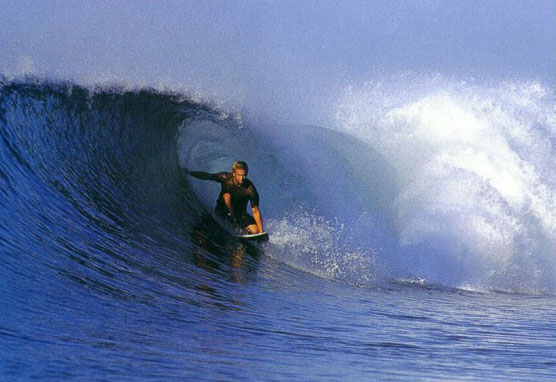
There are similar neighboring islands and islets with similar landforms. The Island's Pacific-facing reefs are situated on the edge of the Philippine Trench, and the extremely deep offshore waters assure the ocean swells have undiluted power when they encounter the many coral and rock reefs, giving Siargao excellent surfing conditions, particularly during the southwest "habagat" monsoon from August to November, when the prevailing wind is offshore.

The best known surfing wave on Siargao with a worldwide reputation for thick, hollow tubes is "Cloud 9". This right-breaking reef wave is the site of the annual Siargao Cup, a domestic and international surfing competition sponsored by the provincial government of Surigao del Norte.


The wave was discovered by travelling surfers in the late 1980's, and named and made famous by American photographer John S Callahan, who published the first major feature on Siargao Island in the US based SURFER Magazine in March 1993, and hundreds of photos in many other books and magazines since.

Callahan has returned to the island many times since his first visit in 1992, and his efforts to photograph and publish surfing related and general location material from Siargao in books and magazines around the world has put the island on the international map and drawn thousands of surfers and toursts to Siargao.


There are several other quality waves on Siargao and nearby islands, but Cloud 9 has received more publicity than any other wave in the area, indeed in the Philippines as a whole. It is the only wave in the area accessible without a boat, leading to overcrowding and the nickname of "Crowd 9" among surfers worldwide as eager foreign and locally owned accommodation and tourist facilities attempt to profit from the magazine publicity and the annual influx of visitors drawn by the Siargao Cup competition in September.
Siargao Island contain the biggest mangrove forest reserves in Mindanao on the opposite coastline. Long stretches of wetlands likewise indicate potentials for commercial seaweed propagation. Siargao Island is greatly influenced by the winds and currents coming uninterrupted from the Pacific Ocean, intensified by the Mindanao current running westward through the Siargao Strait.

Offshore, a classic tropical island lay protected within its surrounding coral reef and the dozen coconut palms dressed in the center circle of the island rustled gently in the morning breeze. Off to the right, well within the massive coastal reef, lay a shining white sand bar some 200 meters long, claimed by a flock of some forty black-headed terns that stood chattering among themselves at the waters edge. The tide of Siargao is diurnal with tidal curves typically present especially on the east coast of the island.

It is the Surfing Capital of the Philippines.
Source: wikipedia.com

Monday, February 19, 2007

Britney Spears has Gone Mad and BALD!

I just heard the most amazing and surprising news of the year! Britney Spears shaved her head.

I know everybody loves attention. BUT I think the "Oops I Did It Again" diva had enough of all the publicity and attention that the paparazzi and the public is giving her recently. I know for a fact that it's not easy being a famous celebrity that she is. The physical and emotional stress she is getting from her divorce with rapper-wanna-be Kevin Federline, her on-and-off affair with Isaac Cohen, and her constant party-hopping with Paris Hilton are probably the very things that are chewing on Bitney Spears' sanity as of this moment.

When I saw Britney's pictures, I was not disgusted or amused. In fact, I felt sad. Although I'm really not a Britney fan I do feel that she needs all the help she can get from everyone around her. Damn! She's a single mom with two kids to take good care of! She definitely is a woman in distress.

Britney has what it takes to make it to the top so can't just anyone out there try to convince the pop princess to take up the broken pieces and move on?! Going bald might be just an experimental look for Brtney however we really don't know what's on her mind, right? With all the bad things everyone is throwing against her, I think it's high time we show Britney the goodness and greatness she is capable of.


The least that a bald and tattooed Britney Spears needs right now is a litany of her stupidities and weaknesses as a person. It's time for the critics to leaver her alone.

Bohol Vacation


It's almost summer here in the Philippines and just like the rest of the you working people out there, I's also dying to get a vacation to get away from the stress and troubles of work and office.
I would like to travel to Bohol first.

Pangalao is an island in the Philippines located in the Central Visayas. Panglao Island is located southwest of the island of Bohol and east of Cebu.

About 250 new species of crustaceans and 2500 new species of mollusks were found around the island. The discovery was the work of the Panglao Marine Biodiversity Project. It is claimed that Panglao alone has more marine biodiversity than Japan and the Mediterranean sea.


Bohol's tarsiers are the one of the famous tourists attractions in the island. According to Wikipedia, "Tarsiers have enormous eyes and long feet. Their feet have extremely elongated tarsus bones, which is how they got their name, and most are nocturnal."


Here's Chocoloate Hills of Bohol with around 1,268 perfectly cone-shaped hills covered in green grass that turns brown during summer season. The hills are elevated 100 to 500 meters above sealevel.


Thursday, February 8, 2007

Annoying Things Kids Say

By Melody Warnick


Snuggling under her blankets at bedtime, Ella, 3, gazed up at me and announced longingly, "I want a new mommy." Not even four years into my tenure as Mom and I was already being edged out of the job. Even worse, Ella started announcing "I want a new mom" frequently, like whenever I failed to buy her a ring pop at the grocery-store checkout. Some days, it was all I could do not to retort, "Yeah? Well, I want a new kid!"

Developing the knack to verbally push your buttons is just part of your child's linguistic and behavioral development. The challenge is to teach her to be courteous while allowing her to assert herself — and do it without responding like you're 3 years old. What to say (and what to skip) in response to these gems:

"Mine!"

Whatever 18-month-old Weston Congdon has, his 3-year-old brother, Addison, wants, even if it's something that's collected dust in the toy box for the past six months. "What drives me crazy is that usually it's a baby toy, like a teething ring," says their mom, Sarah, of Ames, Iowa. "I think, 'What are you gonna do with it other than take it away from your brother?'" Now Weston, a beginning talker, walks around the house repeating "Mine, mine, mine" ad nauseam. His frustrated mom has been known to retort, "Well, then, the couch is mine and you can't sit on it."

A better way to respond: As tempting as it is to give little ones a dose of their own medicine, it won't help them see the error of their ways, and it may confuse them. Yet keeping your cool in the face of "Mine!" can tax even the most Zen-minded mom.

"Ignoring the behavior is best, but even as a clinical psychologist, I can't," admits Ray Levy, Ph.D., a dad of one and the coauthor of Try and Make Me! "I'd rather have something to say in response that I can depend on." His solution: Toss out a "brain-dead phrase" — a short-and-sweet sound bite that lets a persistent child know he won't get his way. With a child who insists that everything is his, simply keep repeating, "Sorry" or "It's nice to want things." End of story. Even if the empty phrase doesn't completely shut down the whining, having something — anything — to say will keep you from saying something that you shouldn't.

"It's not fair."

Attempts to pry her 4-year-old son away from one last episode of his favorite show usually turn into major bedtime battles for Anne Eide of Columbus, Mississippi. "William will say, 'But it's not fair!' Then he'll cross his arms and stomp down the hall, come back again, and repeat, 'Mom, it's not fair.'" That's when Eide sometimes can't help but let loose with "Listen here, Mister, you either turn off the TV now or you won't watch it for a week!"

A better way to respond: On nights when she's a tad more patient, Eide uses a kid-friendly example to explain why he doesn't always get his way. "I say, 'Daddy doesn't want to be in school all the time, but right now he needs to.'" Translation: Even adults don't get everything they want. The approach usually works. "He looks at me kind of like, 'Oookay.' Then he goes and gets ready for bed," says Eide.

Mary Sheedy Kurcinka, a mom of two and author of Kids, Parents, and Power Struggles, recommends asking your child to start over and try again with less irritating words, such as "Can we please talk about this?" or "Mom, I don't like that rule." Next time he complains that something's not fair, you can say, "Remember, we talked about this before. What words are you supposed to use instead?" Giving your child new ways to express himself makes him more likely to abandon the annoying ones.

"You're not the boss of me."

Eleanor Petersen of St. Louis wants to do everything herself. So when her mom, Amy, was in a rush and buckled the car seat for her, Eleanor, 3, declared, "You're not the boss of me." Petersen had to bite her tongue to keep from answering, "You wanna bet?"

A better way to respond: "As a mom, you have to try not to get caught up in the words and instead connect with the feeling underneath them," says Kurcinka. "You can ask, 'What's going on here? What's the need she's trying to express, and how can I help her do it more appropriately?'" In a calmer moment, Petersen realized that what her daughter really wanted was control. When her mom gave her options (like "Do you want to do the top buckle or the bottom buckle?"), Eleanor was far more likely to cooperate. You can even head off "You're not the boss of me" by teaching your child to say, "I'd like a choice," instead.

"I want it now!"

As I was starting to make dinner, my daughter asked for a cookie, and when I said she could have one for dessert, she launched a major whinefest. "But I want a cookie right now!" Ella demanded. None of my attempts at reason dissuaded her. She just kept insisting again and again and again. Desperate for the "I want it now!" noise to stop, I broke down and gave her the cookie.

A better way to respond: Though I usually stand my ground, giving in once can set you back light-years when it comes to nagging, says Paul Coleman, a dad of three and author of How to Say It to Your Kids. "That's how slot machines work: Every tenth pull you get a reward. It's not a big reward, but it's enough to keep you putting more money in the machine." Instead, he says, I should tell my daughter no once or twice, then ignore future requests and get her mind on something else, like a silly dance or a knock-knock joke. The good news: Such dogged persistence can be a plus in the real world. "You can step back and say, 'When they grow up, at least they're not going to be pushovers,'" says Coleman.

"You never let me do anything."

Carl Mowry, 10, has been known to whine that he never gets to do what he wants. His mom, Carla, has a take-no-prisoners response: "You know what?" says the Omaha mom. "You're right! I will leave your life alone. But I want $800 for the house payment, $200 for food...." Carl gets a full list, and he has to write it all down.

A better way to respond: Lecturing may shut down the grumbling, but it doesn't get at the problem. Find out what's behind the whine by saying, "Is something wrong? I get the feeling you're upset about more than just not getting to play at Brad's house." Whether or not your child wants to confide in you, at least you're opening the door to the conversation — on his level.

"I don't like you."

I'm certainly not the only mom whose feelings have been bruised by a kid who demands a mom swap or says, "I hate you!" Greyson Kreis, 6, of Fairfax Station, Virginia, put in a request for a new mom when his mother, Kim, made him drop the latest Captain Underpants book to clean up his room and turn in early. Unlike me, she had a quick comeback. "I told him that he had better enjoy that night in his bed because the next day I would find him a new mom, and he could go live in her house — but without his toys," she says.

A better way to respond: The unanimous chorus from experts: Don't take it personally. Kids say these things when they're frustrated or angry. It doesn't mean you're a bad parent. Of course, distancing yourself when your kid seems to be dissing your mothering skills isn't easy, but letting your child think that you're all too happy to get rid of him — or worse, that you hate him, too — isn't okay. Since the under-9 set are literal thinkers, they won't detect the reverse psychology at work, and you might end up undermining your child's trust.

To stay calm, try to pinpoint the real reason your kid is lashing out: For 7-year-old Shaun Herock of De Pere, Wisconsin, it was frustration and fatigue. He snapped, "I don't like you! You're not my friend!" when his mom, Mia, refused to grab hamburgers on the way home from a two-hour football practice. Her measured response: "That's fine. You're entitled to feel that way." Shaun stewed for a while, but by the time they got home, the whole thing had blown over.

Herock recognized that her son only said "I don't like you" when he was overtired, and that helped her keep her temper. Easier said than done, of course, but if you're upset, wait until you've calmed down to say anything. "When you get emotional, you lose 50 IQ points," says Ray Levy. "But later on you can say, 'It hurts my feelings when you tell me you hate me.' Usually when kids are calm, they're pretty remorseful."

My daughter's requests for a new mom have died down recently, but now she likes to say, "You hurt my feelings," when I refuse yet another visit to her bedroom at night. While most of the time I manage a response like "Thanks for sharing," I'm not always as calm as I'd like. "We all lose it and say the wrong thing," says Levy. "But it's good for parents to apologize or change their behavior, instead of thinking they have to be right or perfect all the time." In other words, it's always okay to say "I'm sorry" to your kids.